
Choose your loads
Identify the lights, fans, connectivity and other appliances you want to keep running.
Plan energy storage around your essential appliances and the backup you need. Start with a conversation about how your home uses power.
Plan my home backup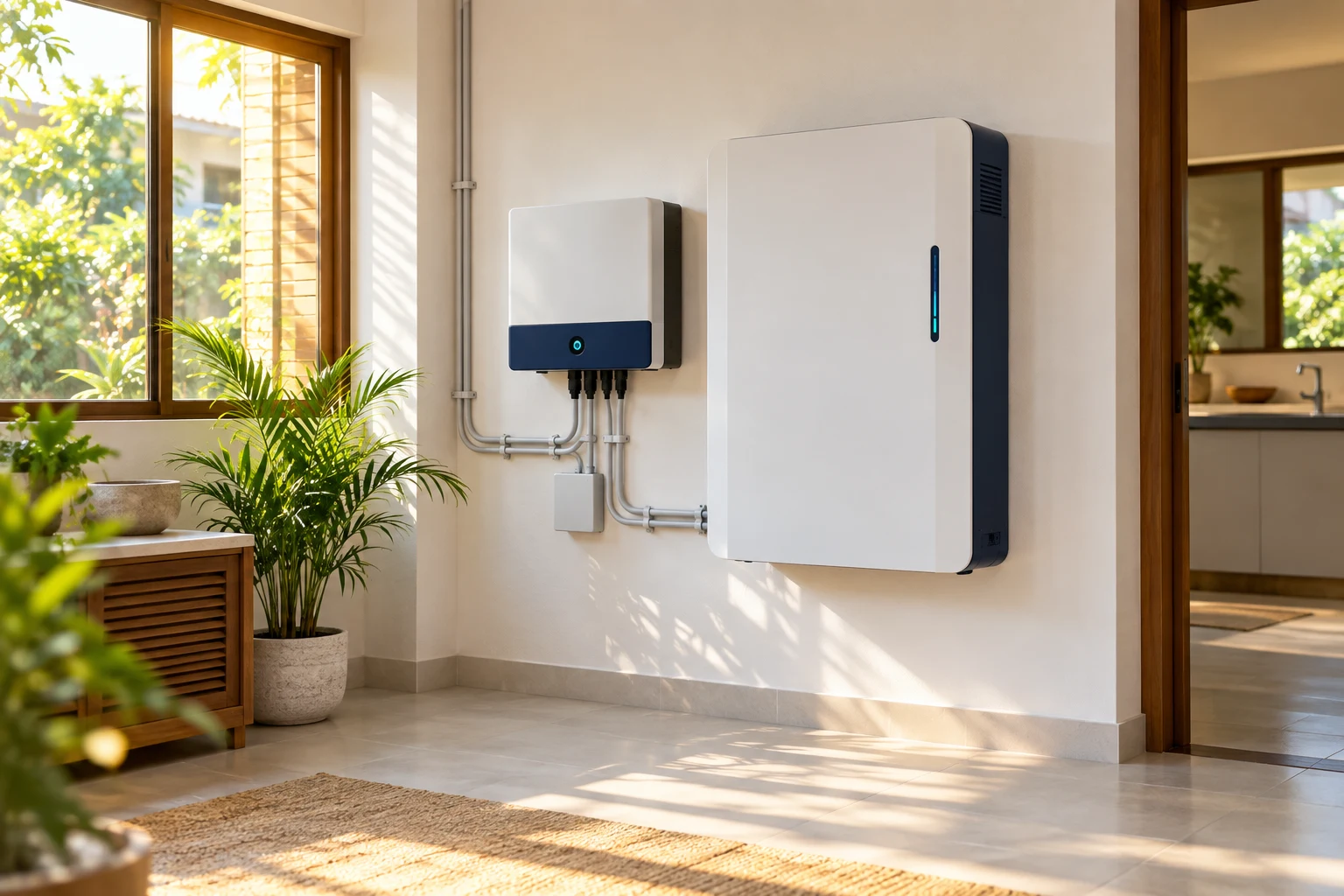
The right storage plan balances energy capacity, simultaneous appliance load and your existing electrical system.
Identify the lights, fans, connectivity and other appliances you want to keep running.
Share how long you need backup and how your household uses those loads.
Review your inverter, solar system, wiring and safe installation location.
Change the capacity and load to see how the energy-to-load relationship affects theoretical runtime.
Illustration only. Actual backup depends on usable capacity, reserve, losses, discharge limits and appliance behaviour.
Formula: rated kWh ÷ load in kW. Does not verify inverter power or equipment suitability.
Get a real backup assessmentConfirm equipment, included work, exclusions, timelines and warranty terms in your written proposal.
Share your location, electricity use and energy goals.
A roof and electrical assessment shapes your system proposal.
Engineering, procurement and installation come together on site.
Get familiar with your system and discuss its care and maintenance.
That depends on the simultaneous power demand, inverter rating and usable battery capacity. Define the loads you want backed up before choosing a system.
The team needs your inverter model, system design and electrical details to assess compatibility.
Share your appliance loads and expected backup duration. Rated capacity alone does not determine runtime.
Share your location and requirements with the Urja Solar team.